Consortium for Street Children
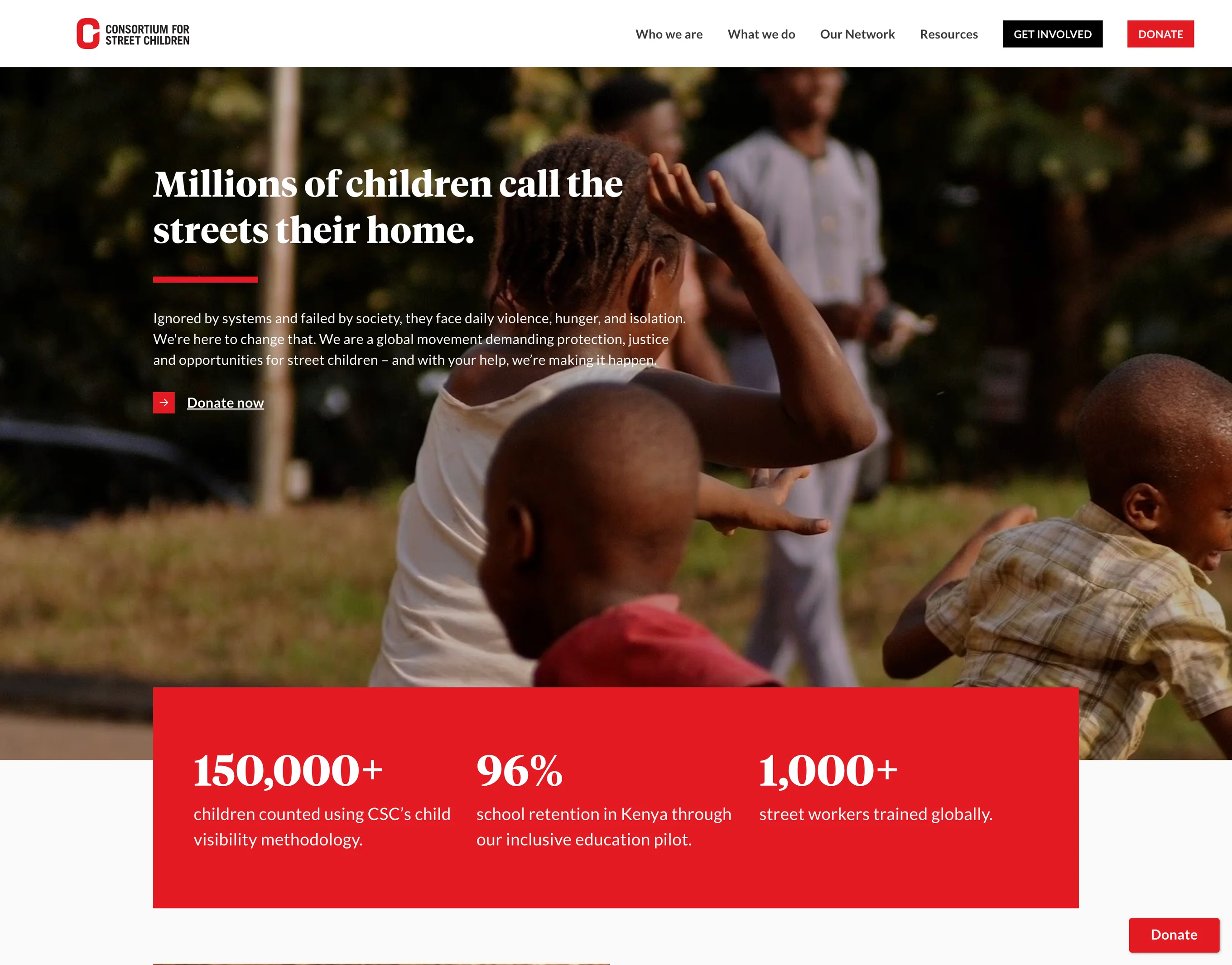
A redesign of the corporate site for the global alliance for street-connected children, and the design and build of the Legal Atlas that maps the laws affecting them around the world.

The Consortium for Street Children connects member organisations in more than 100 countries. The laws that affect street children were all there, sitting in legal documents and spreadsheets, which were accurate but hard to use for the advocates who needed them most.
We were invited to redesign the Consortium's core website, and create the new Legal Atlas alongside it: a platform that shows, country by country, whether a nation's laws meet the standards set out in UN General Comment 21. We worked in direct collaboration with the network itself, through quick prototypes, user testing, and surveys, so the people who would use it every day helped shape it.

Outcome
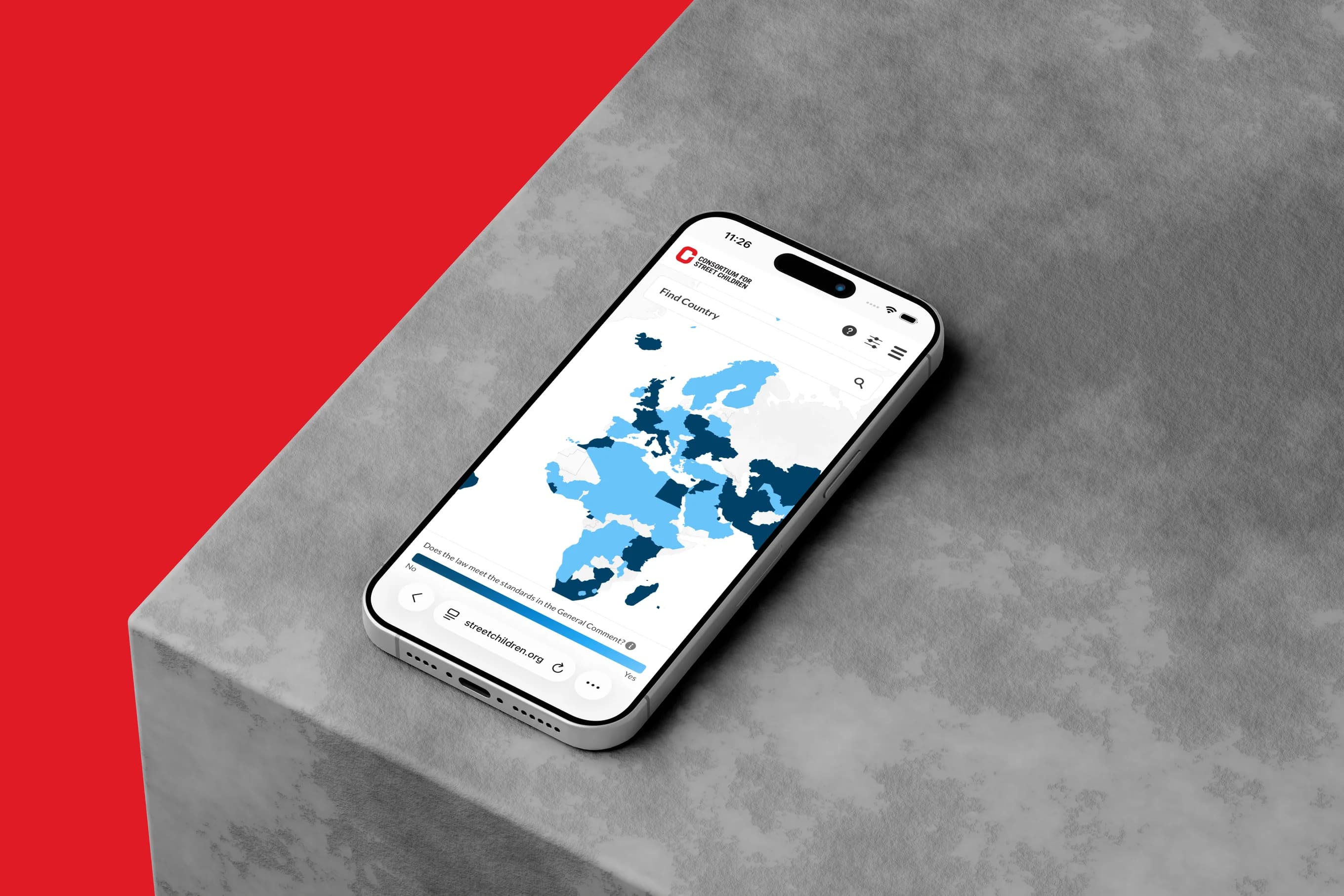
The Atlas gave advocates and policymakers a way to compare the law across countries in a few clicks, and it launched with the Consortium's partners at Salesforce Tower in London.
Spreadsheets not required.
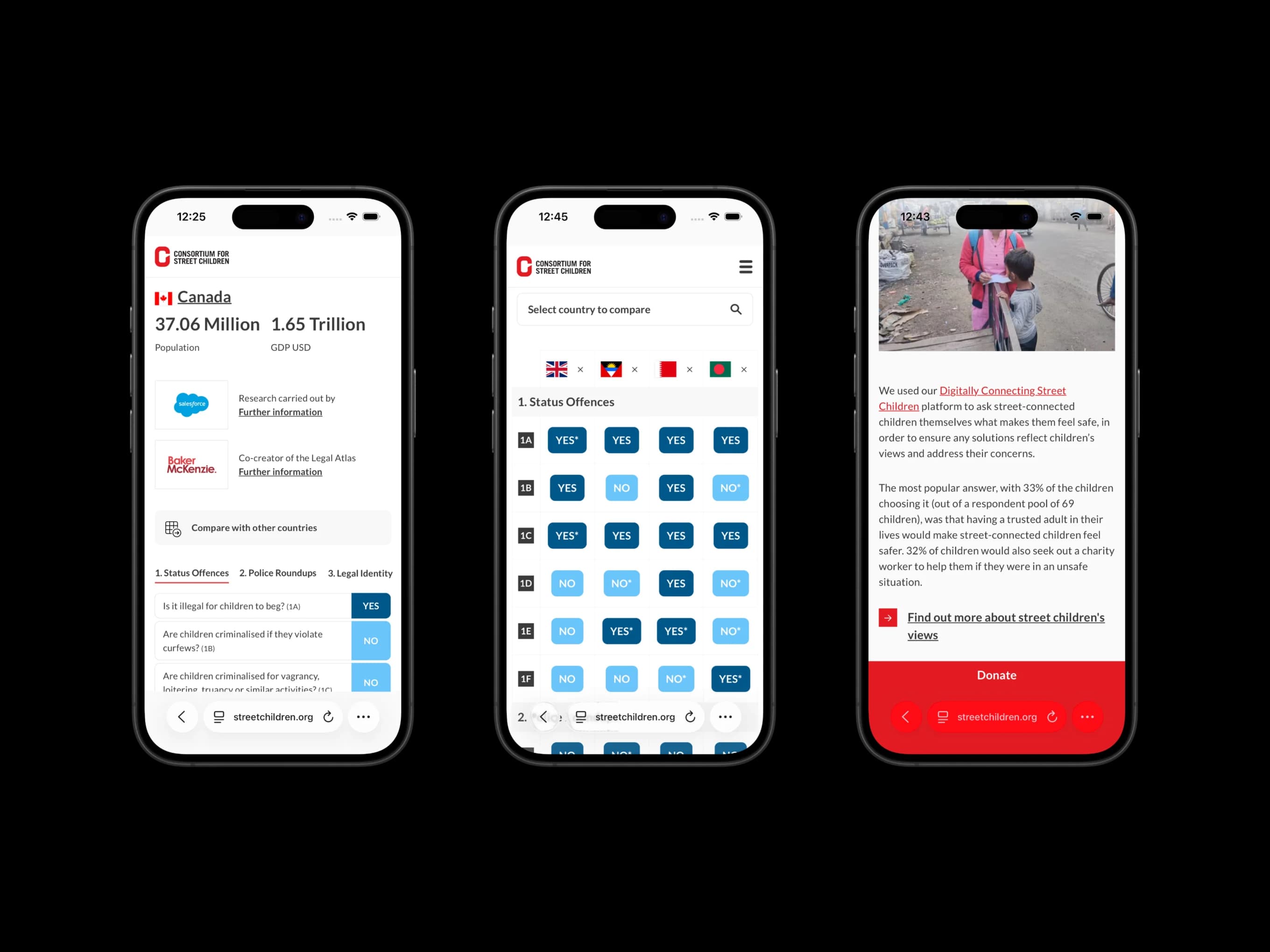
The data existed before the Atlas did, but it lived in spreadsheets, and spreadsheets do not travel well. The new platform lets an advocate compare countries at a glance and spot the patterns that rows and columns hide. The UN standards set the benchmarks: light blue where a country's law meets the standard, dark blue where it does not. With information this politically sensitive, the design's job was to be precise without adding an opinion of its own.
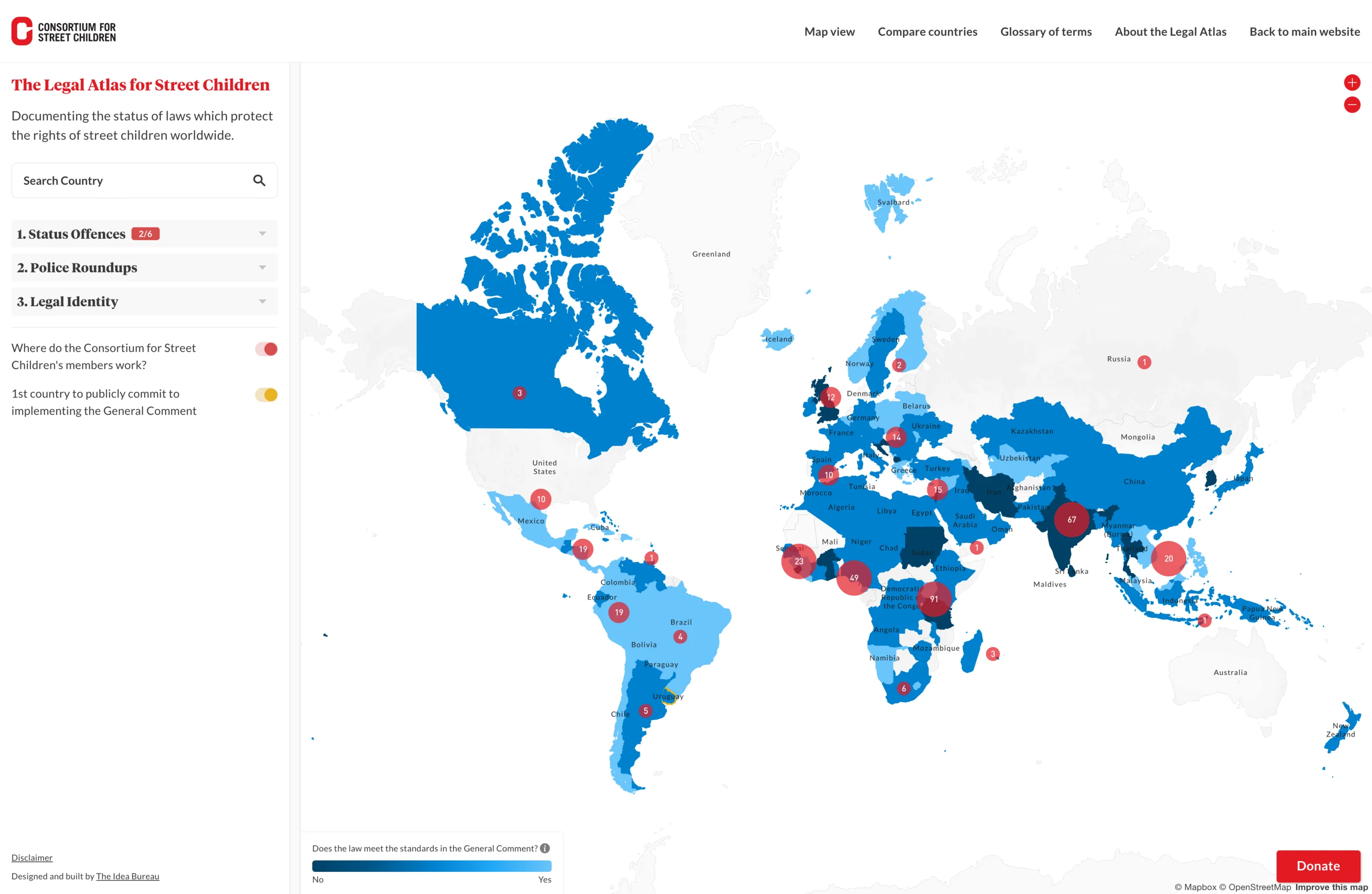
Fig.04 — The Legal Atlas map view: country-by-country status against the General Comment 21 standards.
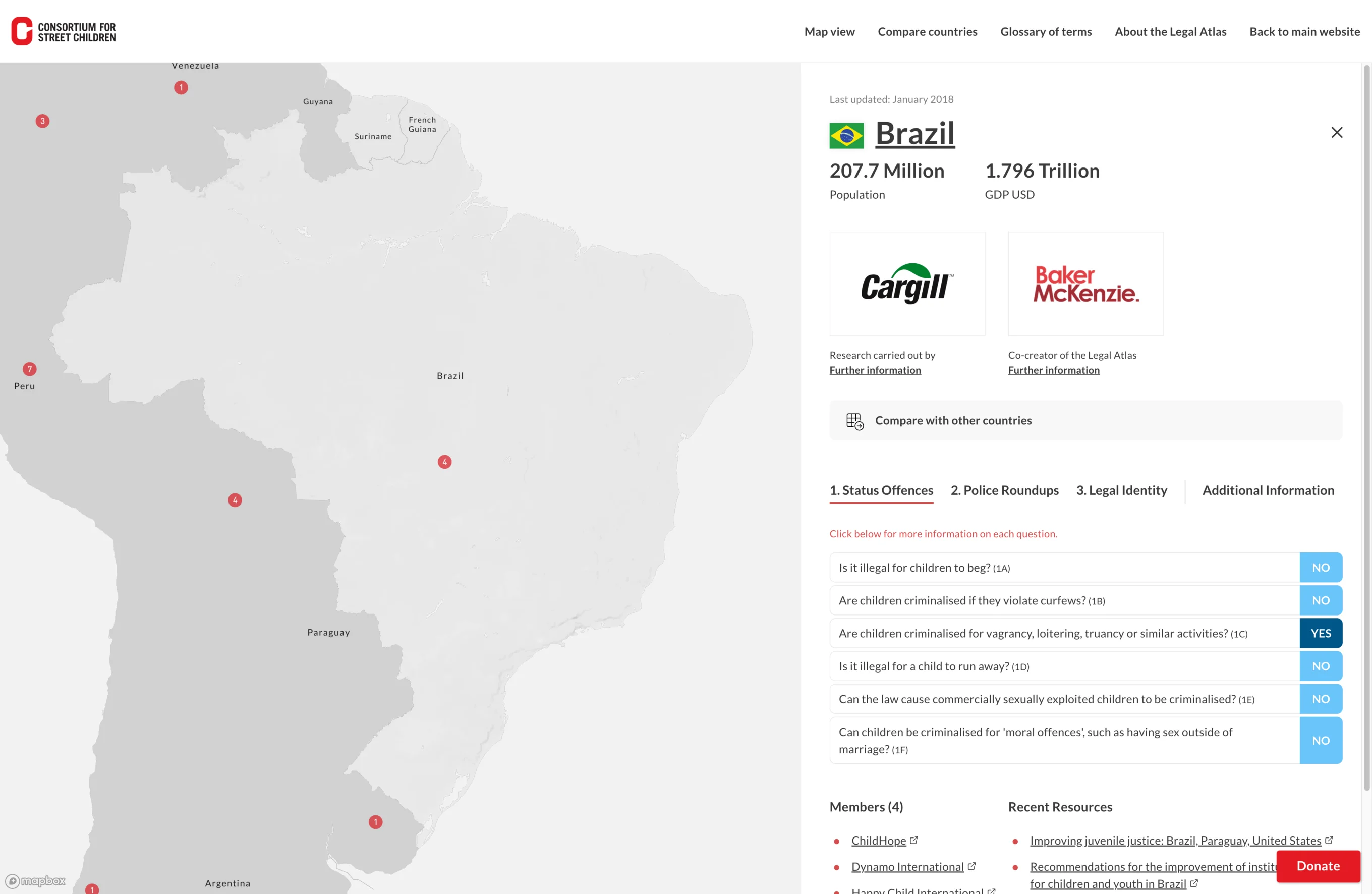
Fig.05 — A country in detail: each question answered against the standard, with the research credited.
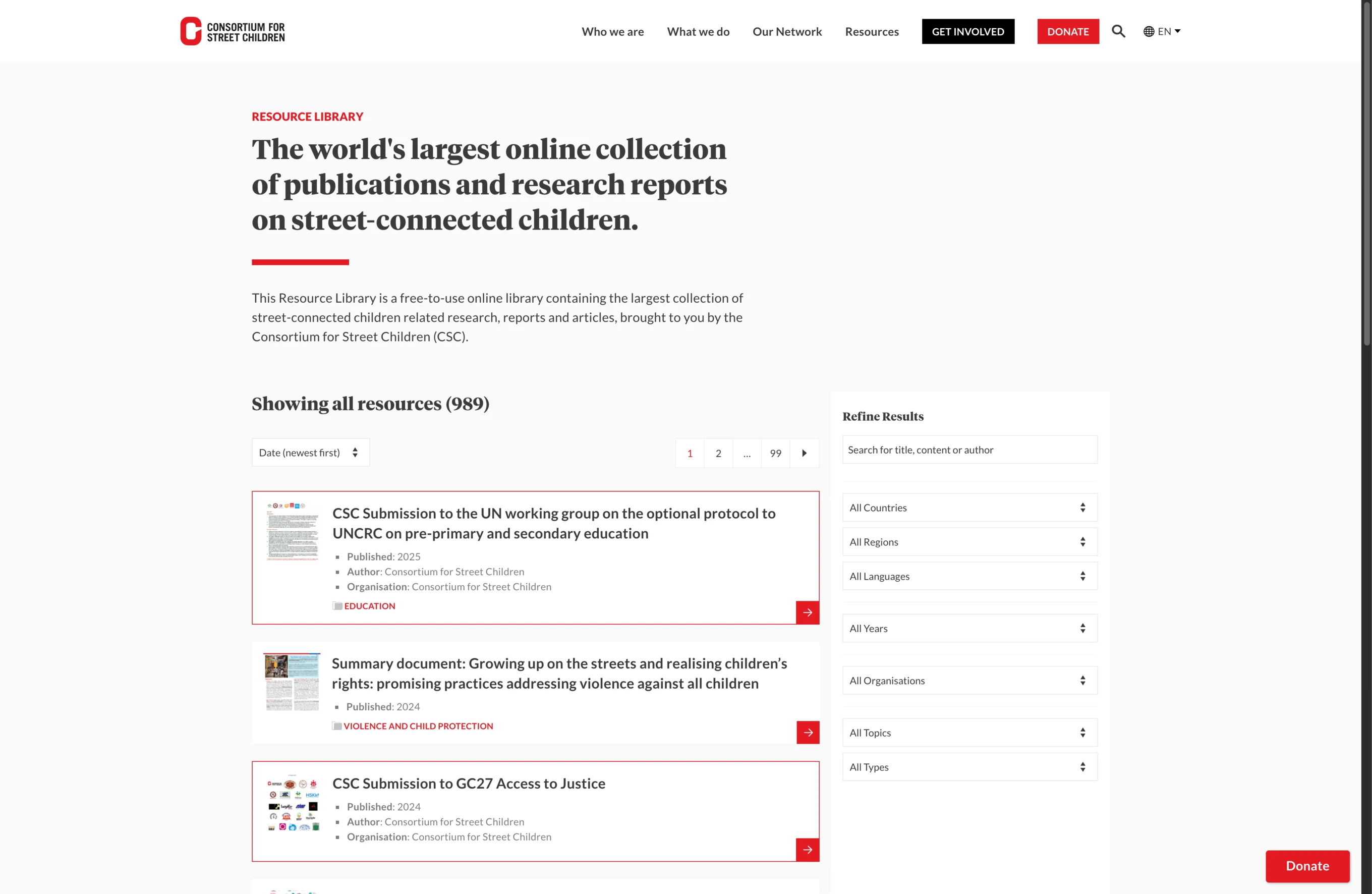
Fig.06 — The Resource Library: the world's largest collection of research on street-connected children.











Research across continents
The Atlas was very much a group effort. Baker McKenzie co-created the legal research, pro bono teams at firms including Google and Salesforce contributed resources, and more than 900 volunteers around the world shaped how the data reads. Our job was to hold the requirements steady across continents and time zones, and to keep complicated, sensitive information clear.
Shane designed and led this project at The Idea Bureau, the studio he ran before starting Studio Brio.